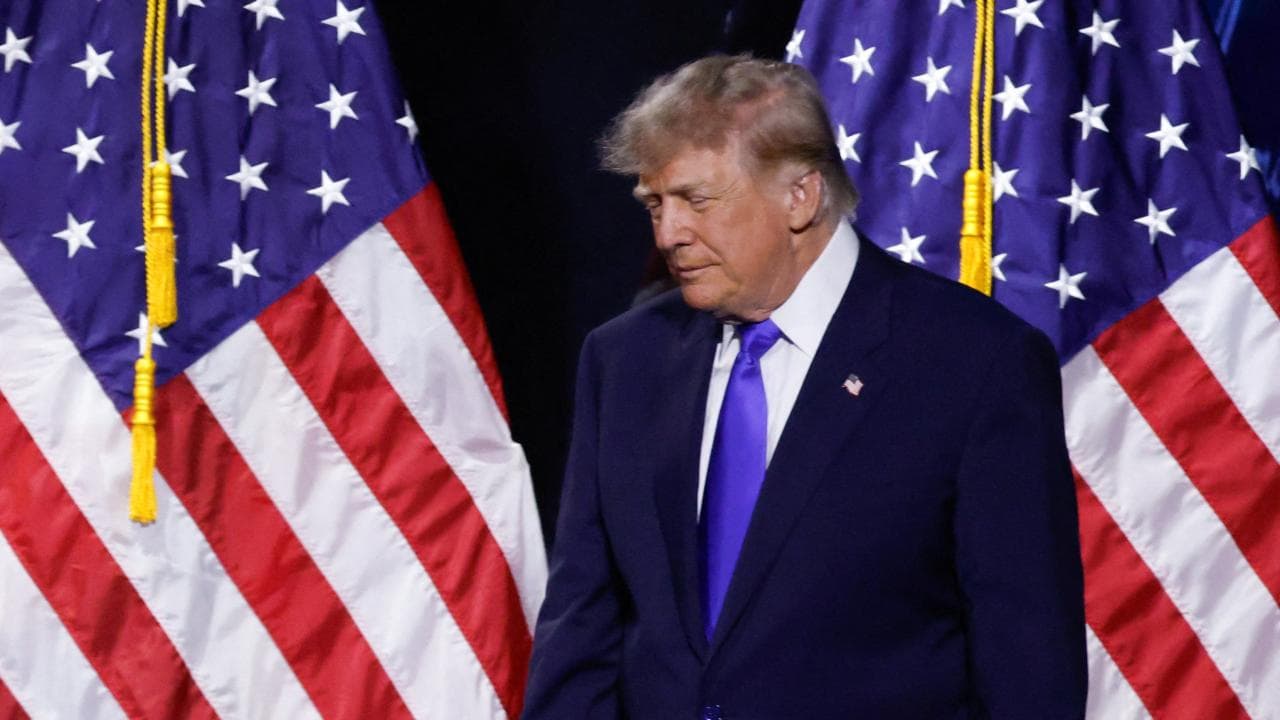
As midterms loom, Trump and his allies try to change the subject
Özet haber: Despite distraction and distortion, voters know what issues will be informing their votes in this election

Despite distraction and distortion, voters know what issues will be informing their votes in this election
This was originally published in The Stakes 2026, a newsletter about the midterm elections. Sign up to get it in your inbox
Elections too often get pigeonholed. The hot take, or simplistic analysis, would have it that just one issue – often the issue the source so happens to be most animated about – will decide the entire result.
Tens of millions of Americans will go to the polls next month. Will they be galvanized by affordability? Maybe it’s Iran. Or healthcare? Taxes, perhaps. Or crime.
It depends, of course, on whom you ask. The US electorate is not a monolith. Just as different voters are grappling with different pressures and realities, they have different priorities and concerns.
Take a look at our voter panel. For Justin Daniels, 45, in Detroit, Michigan, the most significant issue in this election is economic malaise. For Yajaira Martinez, 43, in Pharr, Texas, it’s labor. For Scott Akridge, 60, in Marietta, Georgia, it’s the administration’s brutal crackdown on immigration.
The challenge for any one party trying to win over such a sprawling country is whether it can address enough of these concerns, and obtain the trust of enough voters, to build a coalition.
Which makes the latest polling all the more disconcerting for Republicans, less than two weeks before election day.
The headline takeaways from the most recent Washington Post-ABC News-Ipsos survey were damning enough: as my colleague Shrai Popat reported, most Americans think Donald Trump is using the US presidency to enrich himself, and his approval rating has fallen to a new low.
Beneath the surface, though, the numbers are yet more dismal for Republicans.
Presented with a dozen issues, from affordability and corruption to taxes and transgender issues, respondents were asked which of the two main parties they trust to do a better job of handling them. On all but one – crime – a greater share picked Democrats than Republicans.
On the economy, as the White House continues to hail a “new golden age”, Republicans have lost ground significantly over the past six months. While they commanded a one-point lead over Democrats in April, they are now nine points behind on the issue voters consistently rank as a top concern.
And on immigration, which Trump and his officials have put at the heart of his second presidency, the five-point Republican lead in April has reversed. Almost two years into the administration’s deadly and controversial crackdown, Democrats are now ahead by two points.
In Kansas, where voters have not sent a Democrat to the US Senate since 1932, the party’s candidate, Adam Hamilton, has been pledging to turn down the heat, and ignore partisan battles, amid rising political polarization. Some recent polls have put him ahead.
Midterm elections are almost always tough for Washington’s governing party. There is a conventional playbook for navigating this: senior figures fan out nationwide to reassure the people who backed them two years prior that they get it. They hear them. They’re on it. They just need more time.