‘This is my answer’: Zelenskyy smiles at suggestion he is a scapegoat for Trump’s problems – Europe live
Özet haber: Ukraine president also says Starlink speeds not fully restored and Kyiv working with France on other options Several leaders offered Zelenskyy very friendly welcome or, in some cases, simply a big hug as he walked into the room before the formal part of the meeting got under way. Speaking to Newsmax last night, Donald Trump repeated his views of the two leaders involved in the conflict. Continue reading...
Finally, Merz gets another question on the next EU budget and competing interests, claims and demands from various countries, including from Marine le Pen, who leads the polls ahead of next year’s presidential elections in France.
Merz says it has been a good practice to agree the financial deal “roughly a year before” it kicks in, and says this time is needed to prepare its implementation at the technical level – more so than political discussions linked to various elections. Aaaand with that, he’s gone. He is off to Bonn next I think, where he is expected to attend a big meeting of the youth arm of his CDU party as he continues to face domestic criticism over his style of governance.
Merz gets asked if he had any words of advice for Zelenskyy. He says he wouldn’t offer any advice publicly as the two talk regularly to each other. He says he is aware that the Americans have other interests as well, but the Russian invasion on Ukraine is “an assault on the political order across all of Europe.”
He also takes note of Russia’s own actions to place European companies in Russia under state-mandated administration, and says the government will examine these cases closely. But he says the leaders also discuss a further restrictions on “a very large number of visas still being issued to Russian citizens travelling to the EU.”
“There is certainly room for us to restrict this type of travel … If Russia chooses to respond, we will be ready with a reply,” he says. He also gets a question on migration, and he says this discussion is still ongoing – but reveals that other leaders, including the Greek PM, noted “enormous progress” made in recent years. Back to the question of furth
Merz gets asked about the fallout between Zelenskyy and Trump, and what can be done about it. He says he is in regular contact with Trump by phone, and will see him in person “by December at the latest.” But focuses on saying that he sees “no willingness on the Russian side to end this war,” with all indications actually going in the opposite direction as “the escalation continues.”
“Against this backdrop, I believe it is appropriate, logical, and understandable for Ukraine to strike targets within Russia that hinder the war effort of the Russian government and the Russian army – including both communication and energy supply systems.” He says that’s “the only means Ukraine has to signal to Russia that it is prepared to defend itself.”
Germany’s Merz gets asked about the discussion with Zelenskyy and his request for more money for Ukraine. He says it was more of a discussion with no formal decisions, but says “we are all very concerned about the situation in Ukraine.”
He says there is “a broad consensus” to keep supporting Ukraine “through the winter and into the coming year,” with the commission “assessing the financial requirements,” acknowledging the €90bn loan from last year may not be enough. He says further discussions on this are expected in November and December.
German chancellor Friedrich Merz is the first national leader to leave the room, and he’s now briefing reporters on today’s talks. He begins by saying the talks are “not quite finished yet,” but gives a bit of a readout from the discussions.
He says the leaders discussed the issue dear to his heart, namely how to improve the bloc’s competitiveness, and agreed that “only an economically strong and sovereign Europe can hold its own in today’s world.” He says the leaders will meet to discuss in again in early February.
He also says there was “unanimous, unequivocal” support for a proposal put forward by Macron and Merz on trade policy, with a new instrument to “allow for rapid response” to any imbalances (as covered on the blog on Wednesday).
On the EU budget, he says there are “significant differences” in how countries look at this issue, as “a smaller group” calls for the budget to be reduced, and “a larger group” want it to be expanded further. “We are all facing the need for substanti
in Brussels EU leaders have finished their talks on Ukraine and hybrid threats in Europe in the last half hour, according to an EU source. They now move to the topic of migration, where sudden influx of arrivals in Ceuta is likely to be in focus.
in Brussels Ukraine’s president Volodymyr Zelenskyy has asked the EU for another €70bn next year to fund Ukraine’s defence against Russia. According to a transcript of his remarks, he told EU leaders that the war will cost €155bn in 2027 (15:13). “And we need at least €70 bn more from you – for defence, for weapons, and for our resilience. This is a realistic amount.”
The EU is currently giving Ukraine regular payments from a €90bn funding plan agreed last December that was intended to cover two-thirds of Kyiv’s civilian and military needs for 2026-27. The remaining third was to be filled by other “international partners”, such as the UK, Canada, Norway and Japan. The realisation that Kyiv again risks a financial crunch has put Russia’s €210bn assets frozen inside the EU back on the table. The EU takes the profits from those assets to support Ukraine, but last year decided against using the funds themselves, instead opting for an EU-backed €90bn loan.
The full text of Zelenskyy’s address, released by his office, also includes some further interesting nuggets. Describing Putin’s Russia as an existential long-term threat to Europe, he explained: “Some of today’s European leaders, some of today’s people running in elections and taking part in politics in your countries were still at school when Putin was already waging war.
And even back when Bill Clinton was still President of the United States, Putin was already waging war. Against the Chechens. And that war taught Putin a lesson. If he uses oil and gas to tempt the world, many politicians look the other way – even when cities are turned to rubble and villages are burned to the ground. That is exactly how Putin has been running things ever since.
And he always has some “excuse” for why he can’t live in peace with one country or another.” He also tried to set out a pan-European logic for fighting Putin, saying: “That is why the EU – and your unity, and every truly independent European
Ukraine’s Zelenskyy has just released five clips from his earlier address to the EU leaders, delivered behind the closed doors, and there are some really striking bits there.
He started with general praise for the EU … “Unity in defence is always built by many, many standing together, and without a determined European Union capable of making strong decisions, Putin would have gone much further by now. The European Union has not fallen apart, and it has not backed down or given in to fear when it came to defending the European way of life, and that mattered just as much as the courage of Ukrainians.” … before turning to the most controversial issue of Ukraine’s relations with the US under Trump, and seemingly making a direct reference to the upcoming midterm elections in the US. “I am grateful to all of you who are trying to keep Europe and the United States together. There are so many people with good hearts in America who sincerely want evil to lose and Ukraine to stand strong, and th
That’s a brave response from Zelenskyy, but I’m not sure he had any better option available to him. We all know the answer to this question.
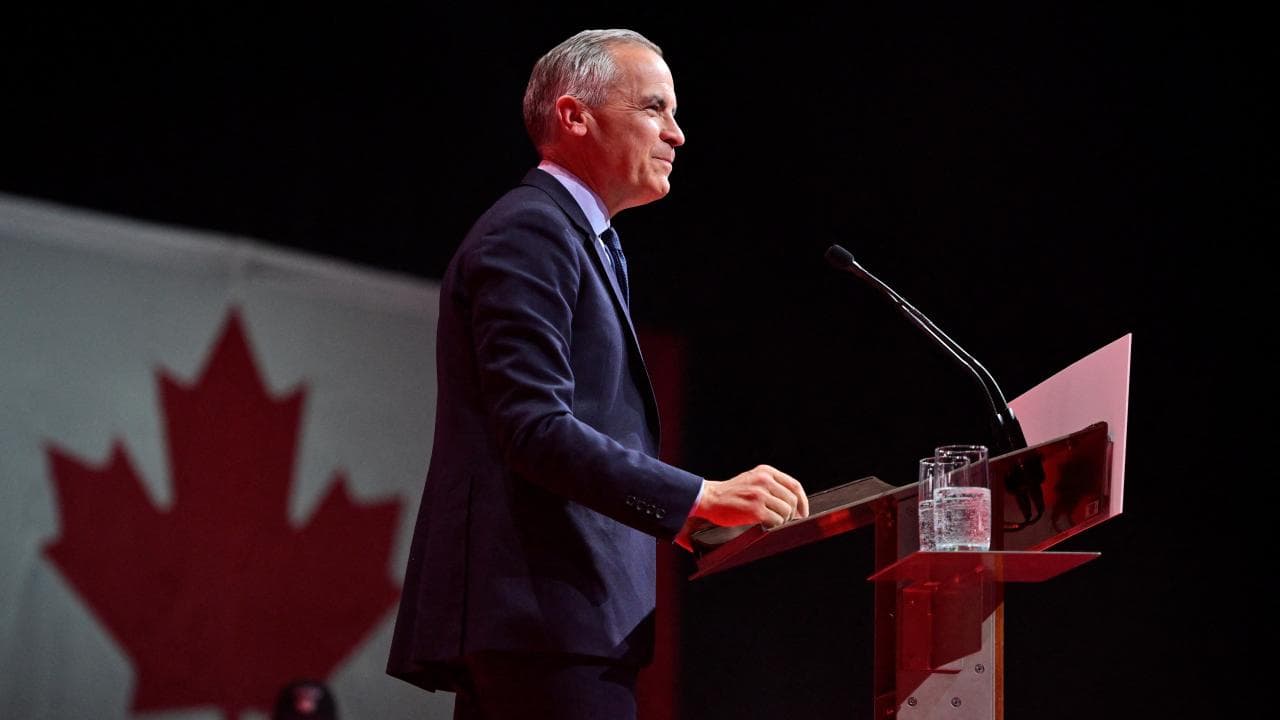
Oh, that’s tasty. Zelenskyy got asked by Sky News if he feels he’s being treated as a scapegoat for Trump’s domestic problems ahead of the tricky midterm elections. In response, he pauses for 15 seconds, and eventually smiles before saying: “This is my answer.” Ouch.
And the press conference immediately wraps up after that.
Asked again if he’s feeling some pressure among European leaders or fearing potential changes in European politics with big elections coming up next year, he says that he “feels full support from Europe now.” “Europe is very united and it’s cognisant of all of the risks,” he says. He says the war clearly shows “major risks for Europe” as he recalls recent incidents in Bulgaria, Germany, Poland, Romania.
“Europe understands as long as Ukraine stands, there will be fewer escalation with Russia,” he says. He says Russia’s demands are not about Donbas or any part of its territory, but about “our country’s existence.” “We’re now standing and fighting. What’s the alternative? Annihilation.” He says Putin “wants to destroy us,” and “does not respect our sovereignty and territorial integrity.”
“So you really trust that he needs only a part of our country?” He also warns that any further progress in Ukraine could also trigger a wave of Ukrainian migrants in Europe. Zelenskyy says that he often
Zelenskyy gets asked about Trump’s comments that he is more difficult to deal with than Putin (11:09). He says that in his meetings with Trump he always found topics for discussion and decisions. “I’m only standing up for Ukraine’s interests,” he says, responding to Russian attacks. “And no matter how Russia would like to limit all of our rights, it’s clear that we do have a right to defend ourselves.”
He says Putin “does not seek negotiations in any format,” but only “playing these games of words.” “He does not want the war to end,” he says, saying Putin’s actions are a “parody” of efforts to end the war.
He says that’s why he cannot accept any diesel deals with the US, because they will then be followed by gas agreements or other attempts to lift sanctions on Russia or its frozen assets, banking system, chemical industry, certain Russian individuals. “If I don’t stand up to this, if I don’t defend it, who else will do this diplomatically?”
Asked about his relationship with Hungary’s Magyar (13:08), Zelenskyy says it was “a very good meeting” on the economy, logistics, energy. He says he is “not against” meeting the Hungarian PM in Budapest next.
Zelenskyy gets asked if he heard any criticism from fellow leaders to his response to the US deal with Russia on diesel. He says he “heard … only support,” and he is “grateful to them for this.” He says the diesel deal caught Ukraine by surprise, and he believes Ukraine “should be aware of these things.”
He says despite all of that Ukraine is ready to support an energy ceasefire, but “it all depends on Russia and they do not want it.” “And if there is no energy ceasefire, give us anti-ballistic missiles so that I can protect my energy facilities – … not too many, but for the period … of the diesel deal.”
He says Ukrainian negotiators are in touch with their US counterparts, and “in the coming days, they will arrange a meeting at a certain level,” and they will keep discussing it.
Zelenskyy gets directly asked if Ukraine is hitting refineries in Russia. He says he “usually don’t communicate” the details of Ukraine’s military operations, but says “the main rule of our operations is to respond.” Earlier he said Europe is “making certain steps” to have its own track in peace negotiations, but he didn’t offer more details on that.
Kaynak: The Guardian · Özgün metin İngilizcedir.